You Moved to a Tax-Free Country. The IRS Doesn't Care.
Every American expat in Dubai has the same moment about four months after arriving. The one where a colleague mentions they don't file taxes anymore, and you realise that applies to literally everyone at the table except you. The UAE has no income tax. But the United States taxes its citizens on worldwide income regardless of where they live. You're the exception to the tax-free dream, and it's more complicated than you think.
Americans represent a growing chunk of Dubai's expat population — attracted by the same things everyone else is (sunshine, safety, career opportunities, no income tax for everyone except them). But the relocation process from the US involves a few unique headaches that no other nationality faces. This is the guide the HR department won't give you.
The Tax Situation: FATCA, FBAR, and the Exclusion
Here's the reality. As a US citizen or green card holder living in Dubai, you must still file an annual US federal tax return. And in some cases, state taxes too.
The key tools that keep your actual tax bill low (or zero):
- Foreign Earned Income Exclusion (FEIE): For the 2025 tax year, you can exclude up to $126,500 of foreign earned income from US taxation using Form 2555. You must meet either the bona fide residence test (full calendar year in UAE) or the physical presence test (330 days outside the US in a 12-month period).
- Foreign Housing Exclusion: You can exclude or deduct certain housing costs (rent, utilities) above a base amount. In Dubai, where rent is high, this can shelter significant income.
- Foreign Tax Credit (Form 1116): While UAE has no income tax, you pay VAT and certain fees. The credit is limited but worth claiming.
Now the scary parts:
FBAR (FinCEN Form 114): If the total of all your foreign bank accounts exceeds $10,000 at any point during the year, you must file an FBAR. This includes your UAE salary account, savings account, even a Liv. digital wallet. Penalties for non-filing start at $12,500 per account per year and can reach criminal charges for wilful violations. File this electronically by April 15 (with automatic extension to October 15).
FATCA (Form 8938): If your foreign financial assets exceed $200,000 on the last day of the year (or $300,000 at any point), you must report them on Form 8938 with your tax return. This overlaps with FBAR but is a separate requirement. Yes, you might file both.
Get a US-qualified tax professional who specialises in expat returns. Budget $800–2,500/year for a proper expat filing. Firms like Greenback Expat Tax Services and Bright!Tax handle remote filings for Americans in the UAE. Don't use your hometown CPA who's never filed a Form 2555.
Visa Options for Americans in Dubai
Your employer handles most of this if you're arriving on a company transfer. But here's the landscape:
- Employment visa: Sponsored by your employer. The standard route. Takes 2–4 weeks once your employer initiates the process. You'll do a medical test (chest X-ray, blood test) at a DHA-approved centre.
- Golden Visa (10-year): If you're purchasing property worth AED 2M+ ($545,000+), investing in a UAE business, or qualifying as a specialised professional. No employer sponsor required — you're self-sponsored.
- Freelance/Remote Work Visa: Available through free zones like Dubai Internet City and Meydan Free Zone. Annual cost AED 15,000–25,000 including visa, medical insurance, and Emirates ID. Good for remote workers keeping US clients. Our digital nomad guide covers this in detail.
One nice perk for Americans: your US driving licence converts directly to a UAE licence at the RTA. The US is one of 37 countries with a direct swap agreement. Bring your valid US licence, passport, visa page, and Emirates ID. The process takes about an hour and costs AED 580. No driving test required.
Shipping Your Life Across the Ocean
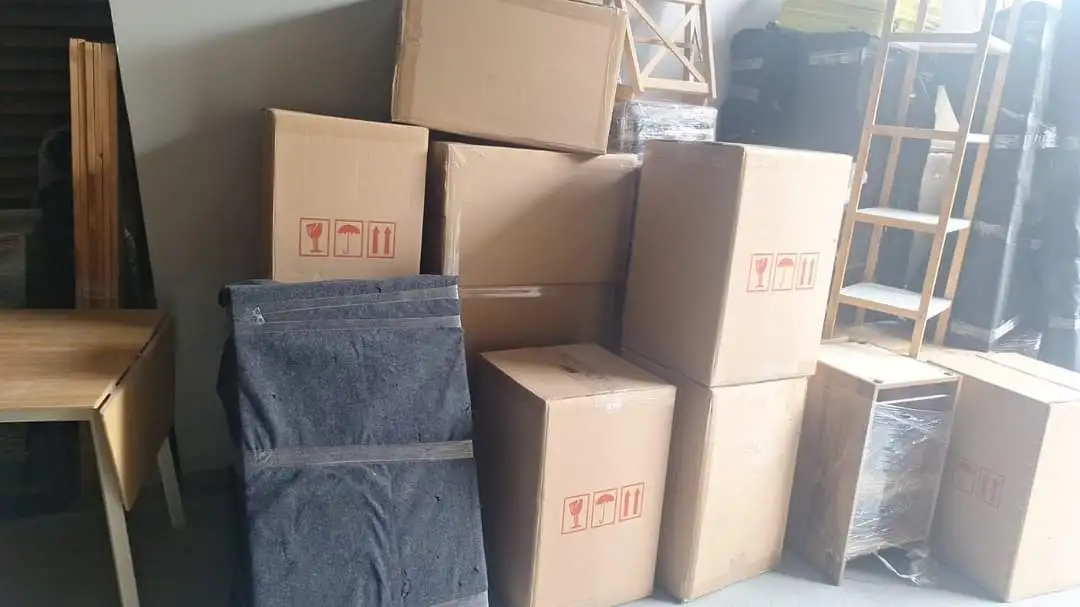
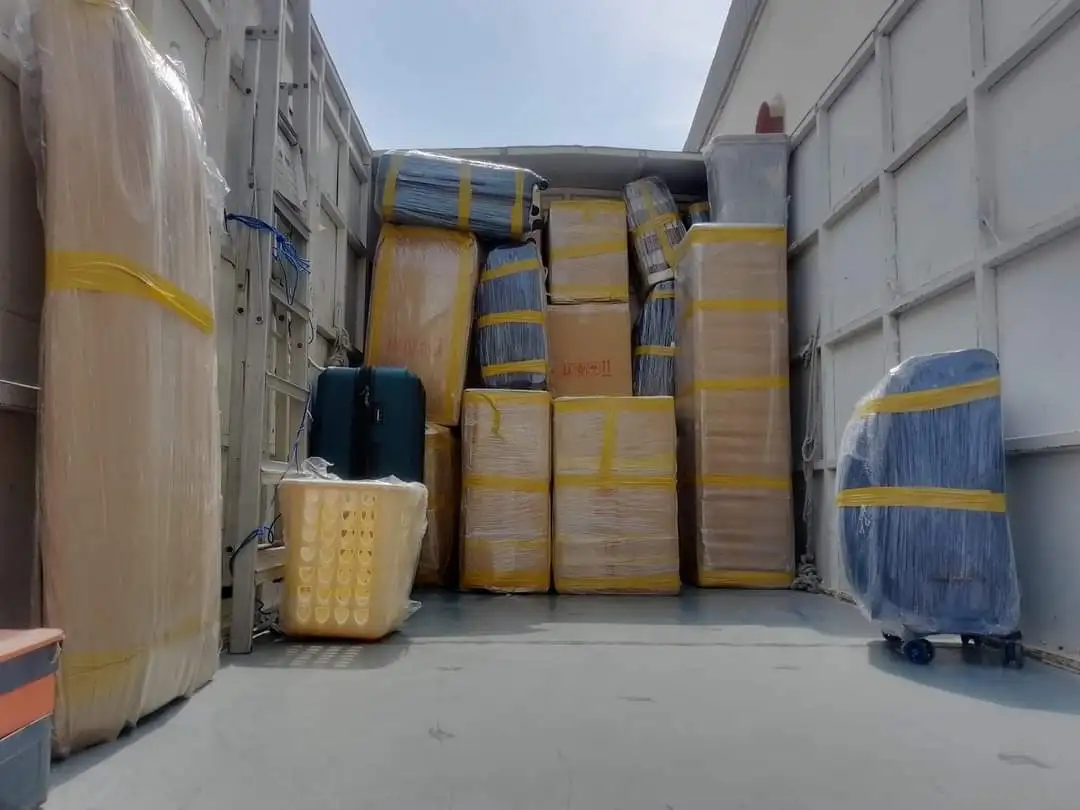
Most Americans ship a 20-foot or 40-foot container of household goods. Here's what that looks like:
Transit times:
- East Coast (New York, Miami, Savannah) to Jebel Ali Port: 4–6 weeks
- West Coast (Los Angeles, Long Beach, Seattle) to Jebel Ali: 6–8 weeks via Pacific and Indian Ocean
- Gulf Coast (Houston) to Jebel Ali: 5–7 weeks
Costs:
- 20-foot container (studio/1-bed): $3,500–5,000
- 40-foot container (3-bed house): $5,000–8,000
- Customs clearance at Jebel Ali: AED 2,000–4,000 for personal effects with a valid residence visa
Customs clearance for personal belongings is straightforward if you have a valid UAE residence visa. Without it, you'll pay import duties. Time the shipment so it arrives after your visa is processed — not before. The clearance at Jebel Ali typically takes 3–5 business days once all documents are submitted.
What NOT to ship: prescription medication in large quantities (bring a doctor's letter for personal supply), alcohol (allowed in personal shipments in limited quantities with proper documentation), anything with lithium batteries in bulk, and frankly, most kitchen appliances. US appliances run on 110V/60Hz. Dubai runs 220V/50Hz. Your blender, toaster, and hair dryer won't work without a heavy-duty transformer, and transformers are loud and hot. Sell them in the US and buy new ones here.
Banking: The FATCA Problem
This is the frustration unique to Americans. FATCA (Foreign Account Tax Compliance Act) requires foreign banks to report American account holders' information to the IRS. The compliance burden on UAE banks is significant, and some simply don't want to deal with it.
Banks that are generally US-citizen-friendly:
- HSBC UAE: Already has FATCA reporting infrastructure globally. Smooth account opening for Americans.
- Standard Chartered: International framework makes FATCA compliance routine.
- Citibank UAE: Obviously American-origin, so fully set up for US persons.
Banks where Americans may face friction:
- Emirates NBD and ADCB: Will open accounts for Americans but may require additional documentation, longer processing times, and sometimes a higher minimum balance. Don't take the first "no" personally — escalate to a branch manager.
- Mashreq and CBD: Mixed experiences. Some branches handle US clients fine; others flag the FATCA paperwork as too complex.
Pro tip: Keep your US bank accounts open. You'll need them for tax payments, any remaining US financial obligations, and as a fallback. Charles Schwab's international account and Wise (formerly TransferWise) are popular with American expats for moving money between the US and UAE at competitive rates.
Where Americans Tend to Live in Dubai
American expats cluster around communities with American-curriculum schools and western amenities:
- Arabian Ranches: Villa community, family-oriented, near JESS and multiple school options. Read our Arabian Ranches guide.
- Dubai Hills Estate: Newer community with a mix of villas and apartments, near several rated schools. Check the Dubai Hills guide.
- Dubai Marina and JBR: Singles and couples who want walkable nightlife and beach access.
- Al Barsha: Close to the American School of Dubai (ASD) — the most popular choice for American families. Also near Mall of the Emirates.
American School of Dubai (ASD) in Al Barsha charges AED 65,000–95,000/year depending on grade level. Universal American School in Festival City is another option at AED 45,000–70,000/year. GEMS American Academy operates in multiple locations. Waitlists at ASD can run 12+ months for popular grades — apply before you move, not after.
Healthcare: The Insurance Switch
Your US health insurance does not cover you in the UAE. There's no Medicare here. Your employer is legally required to provide DHA-compliant health insurance in Dubai, but understand what that covers and what it doesn't.
The basic mandatory coverage handles outpatient visits, emergency care, and standard prescriptions — check what your corporate relocation package includes before paying out of pocket. But dental, vision, and specialist referrals often require enhanced plans at AED 8,000–15,000/year. If you're used to a comprehensive US plan through a Fortune 500 employer, the base UAE coverage will feel thin. Negotiate enhanced insurance as part of your relocation package.
Prescription medication brand names differ between the US and UAE. Bring a 90-day supply of any regular medication with a doctor's letter, then find a UAE doctor to issue local prescriptions. The generic drug availability here is good and often cheaper than US pricing — even without insurance.
The Cultural Adjustment (It's Easier Than You Think)
Americans coming from car-centric suburban life adapt to Dubai faster than most nationalities. The city is built the same way — wide highways, big parking lots, drive-through everything. The supermarkets are enormous. The A/C runs constantly. It feels familiar.
What catches Americans off guard:
- Tipping: Service charges are already included in most restaurant bills (usually 10%). Additional tipping is appreciated but not the American 20% standard. AED 10–20 at a casual restaurant is generous.
- Alcohol: Available at licensed restaurants, hotels, and bottle shops. Not sold at regular supermarkets. You'll get used to the Barracuda or MMI store runs.
- Amazon: Amazon.ae exists but it's not Prime US. Noon.com is the local equivalent. Delivery times are 1–3 days for most items. You'll stop missing Amazon Prime within a month.
- Driving style: Aggressive by US standards. The left lane on SZR is not for doing the speed limit. Adjust quickly or stay right.
Making the Move with SAMA
We handle the Dubai end of your relocation — Jebel Ali port collection for your shipped container, apartment setup moves from temporary accommodation to your permanent home, and unpacking services that get you functional on day one. Most American families do two moves: a temporary furnished rental for the first month while their shipment clears customs, then the real move once everything arrives.
Budget AED 2,500–4,500 for the apartment setup move and AED 1,500–3,000 for the port-to-home container delivery and unpacking. Get a detailed estimate based on your specific situation.
Frequently Asked Questions
Do Americans pay taxes while living in Dubai?
Yes. US citizens and green card holders must file federal income tax returns regardless of where they live. The Foreign Earned Income Exclusion (FEIE) lets you exclude up to $126,500 of earned income, and the Foreign Housing Exclusion can shelter additional amounts. But you still file annually — and FBAR/FATCA reporting requirements for foreign bank accounts are mandatory with severe penalties for non-compliance.
How long does shipping from the US to Dubai take?
Sea freight from the US East Coast to Jebel Ali Port takes 4–6 weeks. West Coast shipments take 6–8 weeks via the Pacific and Indian Ocean route. Add 3–5 business days for customs clearance once the container arrives. A valid UAE residence visa is required for duty-free personal effects clearance.
Can I use my US driving licence in Dubai?
Yes — the US has a direct licence swap agreement with the UAE. Visit any RTA centre with your valid US licence, passport, visa page, and Emirates ID. The process takes about an hour and costs AED 580. No driving test is required. You can use your US licence for the first 30 days while you arrange the swap.
Which UAE banks accept American customers?
HSBC UAE, Standard Chartered, and Citibank UAE are the most straightforward for American account holders due to their existing FATCA compliance infrastructure. Emirates NBD and ADCB will open accounts for Americans but may require additional documentation and longer processing. Keep your US bank accounts active as backup and use Wise for competitive USD-AED transfers.