You Don't Need a Sponsor. You Need a Bank Statement.
Most people moving to Dubai come on an employer visa. Someone sponsors them, covers their medical insurance, and handles the paperwork. Digital nomads get none of that. What they get instead is the Virtual Working Programme — a one-year residency visa that lets you live in Dubai while working remotely for clients or employers anywhere in the world.
No local sponsor. No local employer. No office. Just you, your laptop, and proof that you earn enough to sustain yourself in a city that isn't cheap. The income requirement is USD 3,500 per month (roughly AED 12,850), proven through six months of consecutive bank statements. That six-month requirement doubled from three months in 2024, and it trips up more applicants than any other part of the process.
The Application: What Actually Happens
The visa is processed through the GDRFAD (General Directorate of Residency and Foreigners Affairs) portal. Here's the step-by-step, stripped of the marketing fluff you'll find on government tourism sites:
- Create a GDRFAD account — you need a valid passport with at least 6 months validity and a passport-size photo
- Submit your application with: employment contract or proof of business ownership, 6 months of bank statements showing USD 3,500+/month income, valid health insurance covering UAE (mandatory), passport copy, and application fee of AED 611
- Wait for approval — processing takes 5-14 business days. Some applicants report faster turnarounds; others wait the full two weeks.
- Entry permit issued — fly to Dubai within 60 days
- Medical fitness test — done at any DHA-approved centre within 30 days of arrival, costs AED 320
- Emirates ID biometrics — appointment at an ICP typing centre, costs AED 370 for the ID plus typing fees
- Visa stamped — total government fees end up around AED 1,300-1,500 including all steps
The whole process from application to Emirates ID in hand takes about 3-5 weeks. During that time, you can live and work in Dubai on your entry permit.
Where to Live: The Nomad Neighbourhood Map
Your neighbourhood choice depends on whether you're optimizing for price, community, or lifestyle. Here's what actually works for remote workers:
Budget Tier: Studios Under AED 30,000/Year
JVC (Jumeirah Village Circle) — Studios from AED 25,000–32,000. Decent apartments, good Wi-Fi infrastructure, and a growing cafe scene. The downside: you'll need a car or rely on ride-hailing. The metro doesn't reach JVC yet. Read our JVC moving guide for community details.
International City — Studios from AED 18,000–24,000. The cheapest option that's still liveable. Dragon Mart is right there for anything you need. But it's far from the social hubs, and the building quality varies wildly between clusters.
Mid-Range: The Sweet Spot
Business Bay — Studios and 1-beds from AED 38,000–55,000. Walking distance to DIFC and Downtown. Excellent for networking. The canal-side cafes double as co-working spots. This is where most nomads with decent income land.
JLT (Jumeirah Lakes Towers) — 1-beds from AED 45,000–60,000. Metro-connected, lakeside restaurants, and a strong community of freelancers and small business owners. The JLT moving guide covers cluster-by-cluster details.
Lifestyle Tier: When You're Earning Well
Dubai Marina — 1-beds from AED 65,000–90,000. The walk, the beach, the restaurants. It's cliché for a reason. Metro-connected. Every coworking brand has a location nearby.
Coworking: Your New Office
Working from your studio sounds romantic until you realize Dubai apartments are small and the walls are thin. Most nomads end up at a coworking space within the first month.
The market breaks down like this:
- Hot desk (shared table): AED 800–1,200/month. Brands like Nasab, Letswork, and A4 Space offer this tier.
- Dedicated desk: AED 1,200–1,800/month. Your own spot, your own screen if you want, locker included.
- Day passes: AED 50–100 per day. Good for the first week while you're finding your rhythm.
Pro tip: many cafes in DIFC and Business Bay function as unofficial coworking spaces. The Grey Goose Cafe on Happiness Street, Nightjar Coffee in Al Quoz, and the Starbucks Reserve in DIFC all have reliable power outlets and fast Wi-Fi. A coffee and pastry runs AED 40-60 — cheaper than a day pass if you only need a few hours.
The Move Itself: Light and Fast
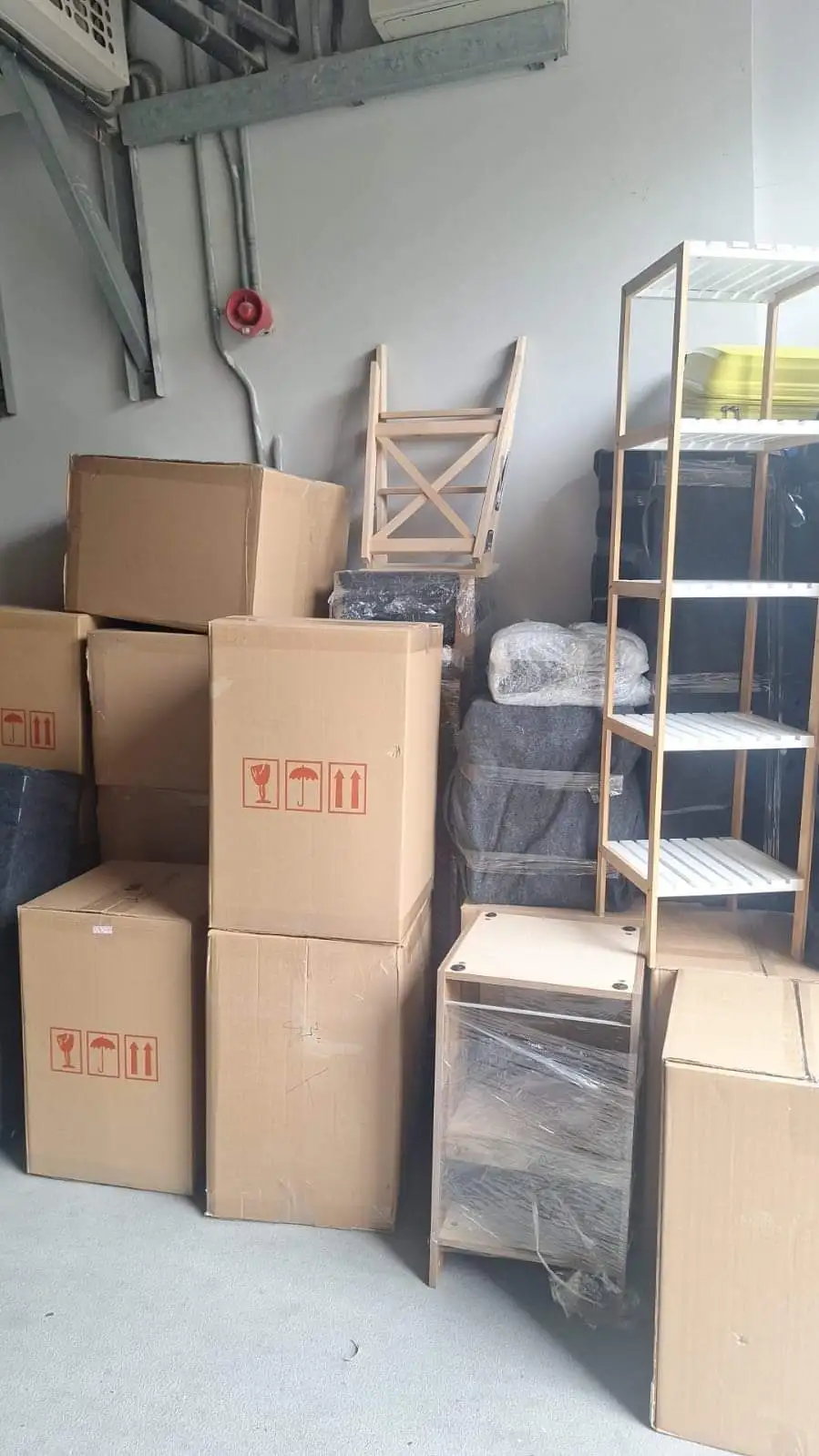
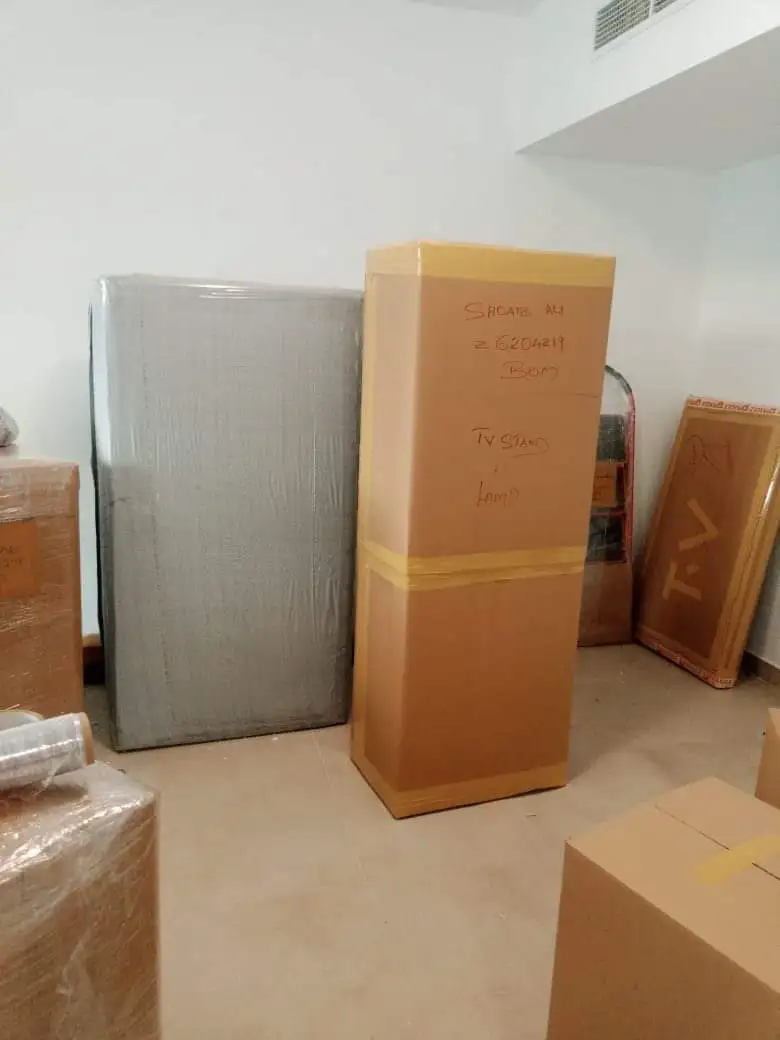
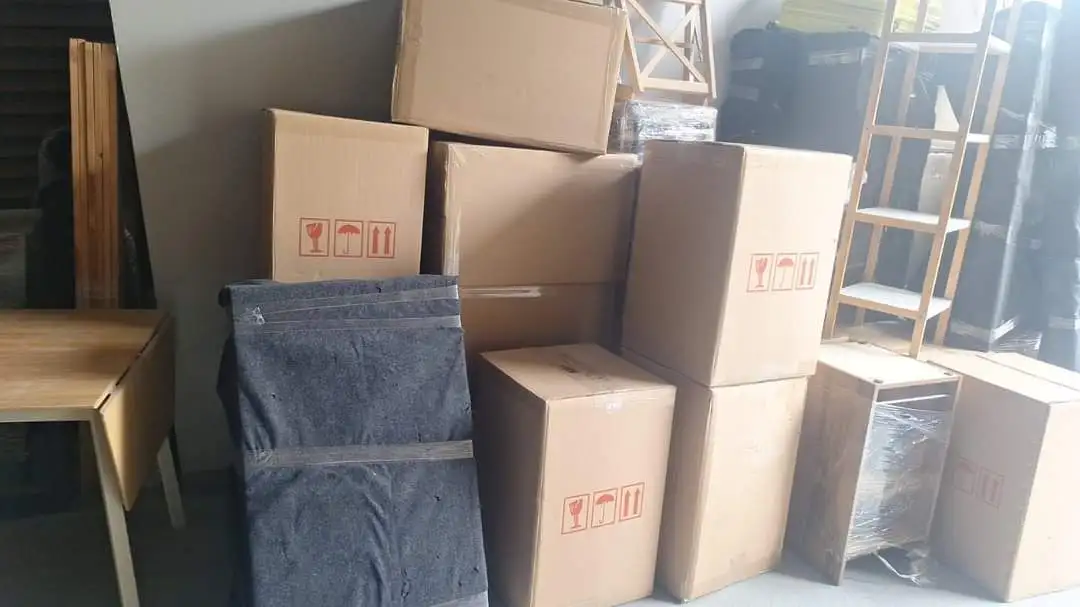
Here's what makes nomad moves different from family relocations: you're probably not shipping a household. Most digital nomads arriving in Dubai bring 2-3 suitcases and maybe 2-5 boxes shipped via air freight.
For the shipping portion — monitors, keyboards, books, personal items — air freight from most origins costs AED 15-25 per kg with a 3-5 day delivery window. Sea freight is cheaper (AED 5-8/kg) but takes 3-6 weeks. For a nomad who wants to start working immediately, air freight wins.
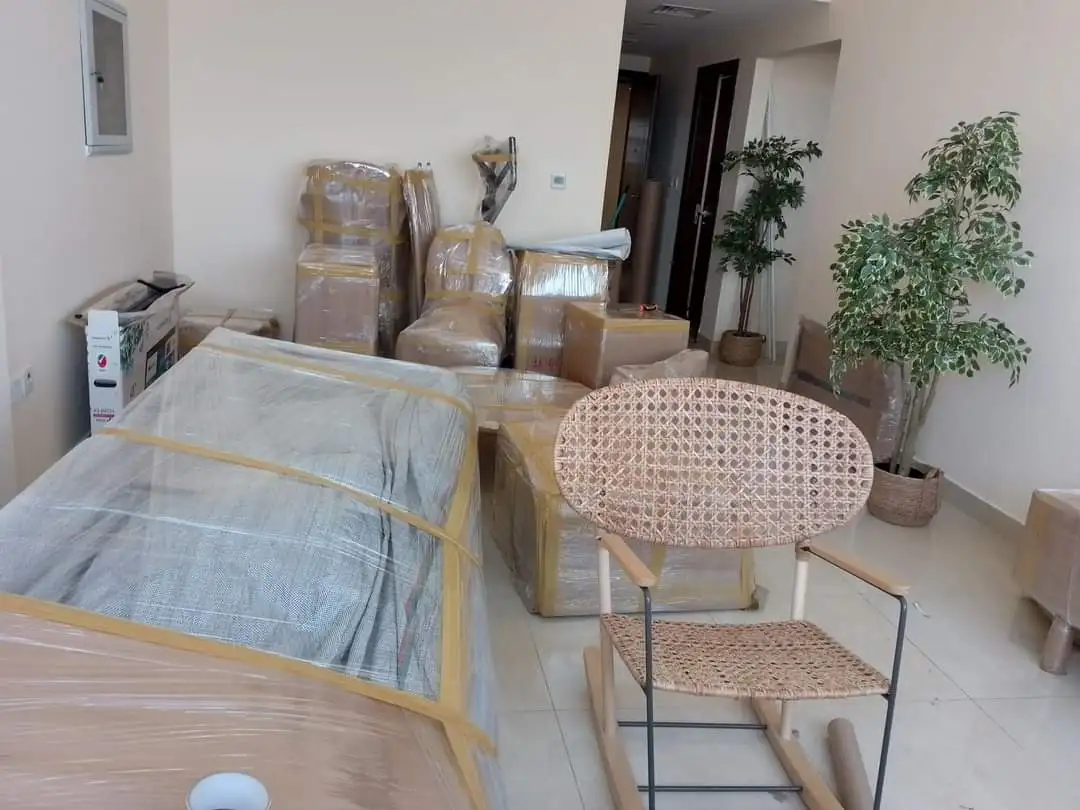
Once you're in Dubai and need to move between apartments — which happens; most nomads switch at least once in their first year — our apartment moving service handles studio and 1-bed moves from AED 800. That covers a small truck, two movers, and basic wrapping. For nomads with minimal furniture, it's often a 2-3 hour job.
The Admin Checklist Nobody Mentions
Once your visa is sorted, there's a cascade of admin tasks. In order of priority:
- Health insurance — mandatory for the visa, and you need it before medical fitness test. Basic plans start at AED 2,000/year. Don't get the absolute cheapest; make sure it covers outpatient visits.
- Bank account — apply AFTER you have your Emirates ID. Most banks require a minimum balance of AED 3,000-5,000. ENBD and Mashreq are the most nomad-friendly. Expect 1-2 weeks for account activation.
- Mobile plan — du and Etisalat both offer postpaid plans once you have an Emirates ID. Budget AED 150-300/month for a plan with decent data.
- Driving license — if you have a license from certain countries (US, UK, EU, Australia, Canada, and about 30 others), you can convert it directly at any RTA service centre. Costs AED 800-1,000 including eye test and application fees. If your country isn't on the list, you'll need to take driving lessons.
One thing that catches nomads off guard: tax obligations don't disappear. The UAE has 0% personal income tax, but your home country may still tax worldwide income. US citizens, for example, owe taxes regardless of where they live. Get advice from a tax professional familiar with both jurisdictions before assuming you're tax-free.
Planning your move to Dubai? Whether you're shipping boxes or arriving with just a suitcase, get a free estimate from our team — we handle everything from airport pickup deliveries to full apartment setups.
Frequently Asked Questions
How much does Dubai's remote work visa cost?
Total government fees for Dubai's Virtual Working Programme come to approximately AED 1,300–1,500. This includes the application fee (AED 611), medical fitness test (AED 320), and Emirates ID processing (AED 370 plus typing fees). Health insurance is a separate mandatory cost starting at AED 2,000/year.
What income do I need for Dubai's digital nomad visa?
You need to prove a minimum monthly income of USD 3,500 (approximately AED 12,850) through six consecutive months of bank statements. An employment contract or proof of business ownership is also required. The income must come from sources outside the UAE.
Can I open a bank account in Dubai as a digital nomad?
Yes, once you have your Emirates ID. Apply at banks like ENBD or Mashreq, which are the most freelancer-friendly. Expect a minimum balance requirement of AED 3,000–5,000 and allow 1-2 weeks for account activation. You'll need your Emirates ID, passport, and proof of UAE address.