The Service Elevator at Princess Tower Fits Exactly One Sofa at a Time
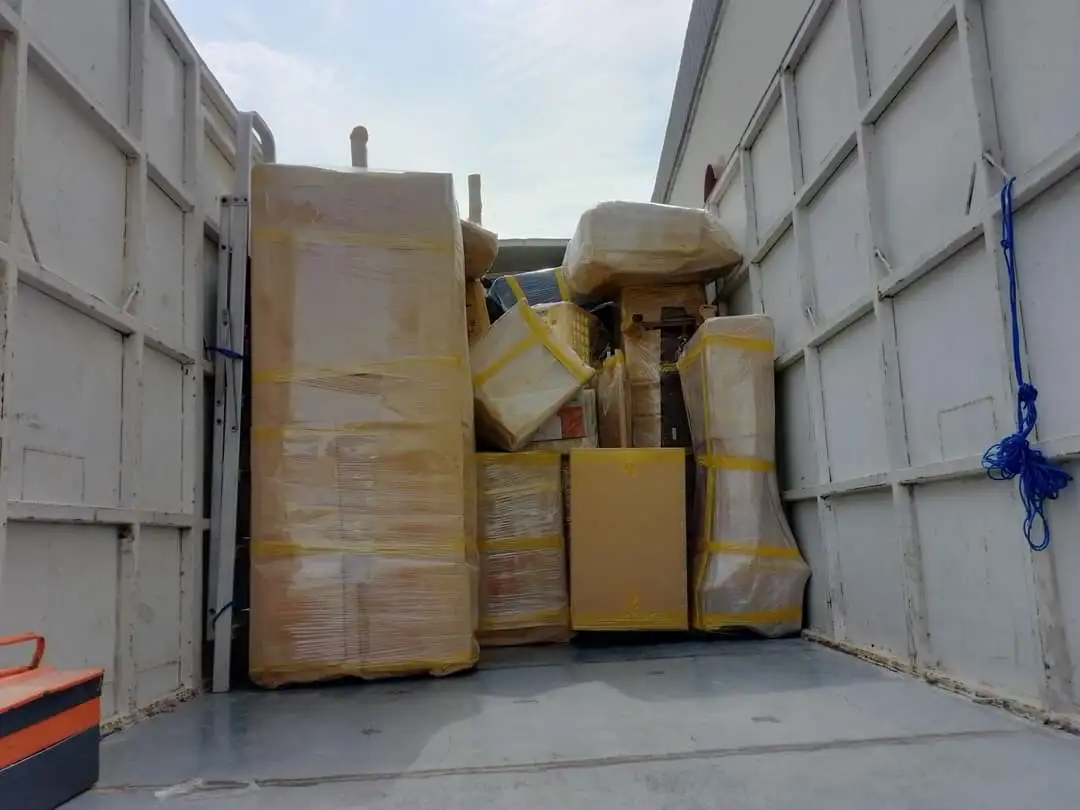
We measured it. The service elevator in Princess Tower — one of the tallest residential buildings in Dubai — has internal dimensions of roughly 2.1m x 1.4m x 2.4m. That's enough for a standard 3-seater sofa standing on its end. But an L-shaped sectional? An 8-seater dining table? A king-size bed frame? They don't fit. And you've got exactly 2 hours of booked elevator time to move an entire apartment's worth of furniture.
High-rise moving in Dubai is a different sport from villa or townhouse moves. The building is as much your obstacle as your destination. Every tower has its own rules, its own quirks, and its own way of making your moving day harder than it needs to be. After thousands of tower moves across Marina, Downtown, JLT, and Business Bay, we've compiled the playbook.
Service Elevator Booking: The System Nobody Enjoys
Most Dubai towers restrict moves to the service elevator. Using the passenger elevator gets you fined — anywhere from AED 500 to AED 2,000 depending on the building. Here's how the booking system typically works:
- Request through building management — either via email, the building app, or in person at the reception desk
- Provide documentation: tenancy contract, moving company trade licence, vehicle plate numbers, sometimes a crew list
- Book your slot: most towers offer 2–4 hour windows. Morning slots (8 AM – 12 PM) are the most popular and book out first.
- Pay a refundable damage deposit: AED 500–2,000 depending on the building. Some hold it for up to 30 days after the move.
- Day-of check: building security inspects the elevator before and after your slot. Any scratches, dents, or damage to elevator walls/doors gets deducted from your deposit.
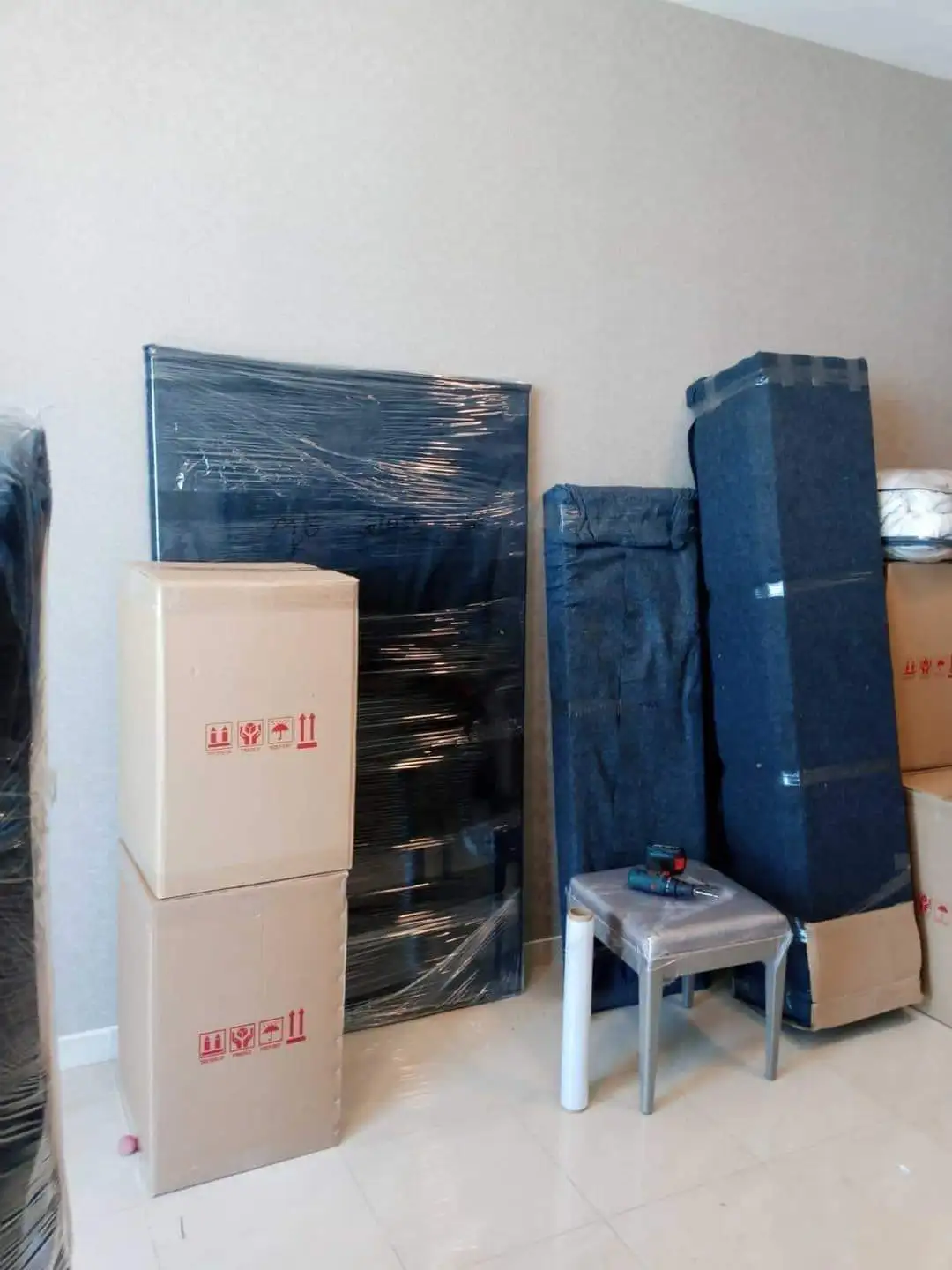
The deposit is the part that catches people. You're putting down AED 1,000+ before your movers even arrive. And getting it back requires the elevator to be in the same condition as when you started. Professional movers line the elevator with padded blankets and corner protectors for exactly this reason. DIY movers rarely do — and rarely get their deposit back.
When Furniture Doesn't Fit: Your Options
Every high-rise move has at least one item that won't fit the service elevator. Here's how we handle each scenario:
Option 1: Disassembly
The most common solution. King-size bed frames, large wardrobes, dining tables, and sectional sofas can almost always be broken down into pieces that fit. Our crew carries Allen keys, socket sets, and power screwdrivers as standard. Disassembly and reassembly is included in our moving packages — though complex items (bespoke furniture, antiques, wall units) take extra time.
Option 2: Stairwell Carry
For floors 1–5, carrying items up the stairwell is sometimes faster than waiting for elevator availability. It's manual, sweaty work, and we charge extra for it — AED 50–100 per floor per large item. But for a single oversized item on the third floor, it beats the alternatives.
Option 3: Crane Hoist
This is the big one. When an item is too large to disassemble and too heavy to carry, it goes up the outside of the building via crane through a balcony or window opening.
- Cost: AED 1,500–5,000 depending on floor height, item weight, and crane availability
- Requirements: Dubai Municipality-certified crane operator, building management approval, clear access below the balcony, favourable weather (no hoisting in high winds)
- Common items: Grand pianos, oversized artwork, marble dining tables, one-piece L-shaped sofas, commercial gym equipment
- Timeline: Crane booking needs 5–7 days advance notice. The actual hoist takes 30–60 minutes per item.
Crane hoists above the 30th floor are significantly more expensive. The crane reach has limits, and higher floors sometimes require specialised equipment. For floors 40+, expect the top of the price range.
Loading Bay Politics: The Tower's Real Bottleneck
Marina towers are the worst for this. Buildings like Marina Gate, Damac Heights, and Jumeirah Beach Residence share underground loading bays with limited parking spots for moving trucks. On peak moving days (Thursday, Friday, Saturday), you might arrive to find two other trucks already occupying the space.
Building management typically enforces 30-minute to 1-hour unloading windows at the loading bay. Your truck pulls in, unloads as fast as possible onto trolleys, and moves out. If you're not fast enough, security asks you to circle the block. In JBR, "circling the block" means navigating through tourist traffic around The Walk — add 20 minutes to every loop.
Our approach: we send a scout team to the loading bay 30 minutes before the truck arrives. They secure the spot, lay down floor protection in the corridor from loading bay to elevator, and have trolleys ready. When the truck backs in, unloading starts immediately. This coordination is the difference between a smooth move and a 3-hour delay.
Tower-Specific Quirks We've Learned the Hard Way
Every building has personality. Here are patterns we've noticed across hundreds of moves:
Marina Towers
Marina Pinnacle: Small service elevator. Anything wider than a standard 3-seat sofa needs disassembly. Two service elevators exist but building management only releases one at a time for moves.
Cayan Tower (Infinity Tower): The twist design means corridors angle differently on every floor. Measure your doorway AND the corridor turn before assuming large items will fit.
Marina Gate 1, 2, 3: Excellent loading bay — spacious, well-lit, dedicated moving slots. One of the easier Marina moves.
Downtown Towers
Burj Khalifa residences: Highly restricted. Moves only on weekdays, specific hours, extensive deposit. Premium building management makes it premium-priced to move into.
Address Downtown: Hotel-residential hybrid means you share service areas with hotel operations. Morning moves compete with room-service trolleys and housekeeping carts.
The Lofts: Older building, more relaxed management, reasonable elevator access. One of the easier Downtown moves.
JLT Towers
Generally the most flexible for moves. Building management is typically less restrictive, elevator booking is simpler, and parking is easier. The trade-off: some older JLT clusters have slower elevators, which means more trips and more time. But the deposit is usually lower (AED 200–500) and the process is less bureaucratic.
Protecting Against Building Damage Claims
Here's something most tenants don't think about: if your movers damage the building corridor, elevator, or lobby, the building charges you — not the moving company. Your deposit gets eaten, and if the damage exceeds the deposit, you get billed separately.
Protection measures we use on every high-rise move:
- Elevator padding: Quilted blankets on all three walls and the floor, secured with painter's tape (no residue)
- Corridor runners: Protective floor covering from elevator to apartment door
- Door frame protectors: Foam or cardboard guards on apartment entrance and elevator door frames
- Corner bumpers: Rubber bumpers on trolleys and large items
The cost of these materials is included in professional moves. The cost of NOT using them is your AED 1,000–2,000 deposit and potentially a repair bill on top.
The Floor Factor: How Height Affects Cost
Moving to a higher floor takes longer. More elevator trips, longer per trip, and the psychological toll on a crew that's been riding up and down for hours. Our pricing reflects this:
- Floors 1–10: Standard pricing
- Floors 11–30: 5–10% surcharge on larger moves (the elevator time adds up)
- Floors 31–50: 10–15% surcharge
- Floors 50+: 15–20% surcharge (plus crane hoist costs if applicable)
For a 2-bed apartment move in Marina, that translates to roughly AED 2,200–2,800 for lower floors and AED 2,800–3,500 for floors 40+. The apartment size is the same — it's the vertical logistics that drive the cost up.
The Move-In vs Move-Out Asymmetry
Moving out of a high-rise is almost always faster than moving in. Why? Because on move-out day, you're loading gravity-assisted trolleys going down. On move-in day, everything goes up. Elevators work harder, trips feel longer, and positioning furniture in a new space takes more effort than pulling it out of an old one.
Budget 30–40% more time for move-in compared to move-out in the same building. If your move-out took 4 hours, the move-in will take 5–6 hours. Plan accordingly, especially if you've booked a limited elevator window.
And if you're moving between two units in the same tower, the rules change again: one service lift, fresh paperwork at both ends, no truck transit. We wrote a separate internal-transfer playbook for exactly that job.
When to Use SAMA for Tower Moves
High-rise moves are where professional movers earn their fee. The elevator booking, loading bay coordination, damage protection, and building-specific knowledge aren't things you can DIY without stress. We know the elevator dimensions at Marina towers, the loading bay schedules at Downtown buildings, and the quirks of every JLT cluster.
Read our move-in permit guide for the documentation side, and check the heavy furniture guide for item-specific protection tips.
Get a free high-rise moving estimate — include your building name and floor number so we can give you an accurate quote.
Frequently Asked Questions
How much does a crane hoist cost for a Dubai high-rise move?
Crane hoists cost AED 1,500–5,000 per session depending on floor height, item weight, and crane availability. Items are lifted externally through a balcony or window opening. Requires a Dubai Municipality-certified operator and 5–7 days advance booking. Higher floors (30+) sit at the top of the range.
How do I book a service elevator for moving in Dubai?
Contact your building management office with your tenancy contract, moving company trade licence, and preferred date. Most buildings offer 2–4 hour slots with a refundable damage deposit of AED 500–2,000. Book at least one week in advance — weekend morning slots fill up fast.
What happens if movers damage the building elevator?
Building management deducts repair costs from your refundable damage deposit. If the damage exceeds the deposit, you're billed separately. Professional movers prevent this by padding elevator walls, protecting door frames, and using corridor runners. Cover varies from one moving company to the next, so ask yours in writing what cover, if any, it holds.