The Reality of Moving Heavy Furniture
Heavy furniture is the leading cause of moving-day injuries and property damage. A standard 3-seater sofa weighs 60 to 90 kg. A solid wood dining table with chairs can top 120 kg. A king-size bed frame with a headboard and storage base easily reaches 80 to 100 kg. Most people underestimate these weights until they try to lift them — and by then, backs are strained and walls are scratched.
At SAMA Movers, heavy furniture is our daily work. Our crews move hundreds of heavy items every week across Dubai apartments and villas. This guide shares the techniques and equipment we use, along with honest advice about when DIY is reasonable and when hiring professionals is the smarter choice.
Essential Equipment for Moving Heavy Furniture
Professional movers never rely on brute strength alone. The right equipment makes heavy items manageable and protects both people and property:
- Furniture dolly (4-wheel): A flat platform on casters, rated for 150-300 kg. Essential for moving refrigerators, washing machines, and heavy cabinets across flat surfaces. Cost: AED 50-150 to buy.
- Appliance dolly (2-wheel hand truck): Designed for tall, heavy items like fridges and wardrobes. The item leans back against the dolly and is wheeled rather than carried. Cost: AED 80-200.
- Furniture sliders: Plastic or felt discs placed under furniture legs. They allow heavy items to glide across tile, marble, and hardwood floors without scratching. Cost: AED 20-50 for a pack of 8.
- Moving straps (lifting straps): Shoulder or forearm straps that transfer weight from your back to your legs and core. These can reduce the perceived weight by up to 60%. Cost: AED 40-100.
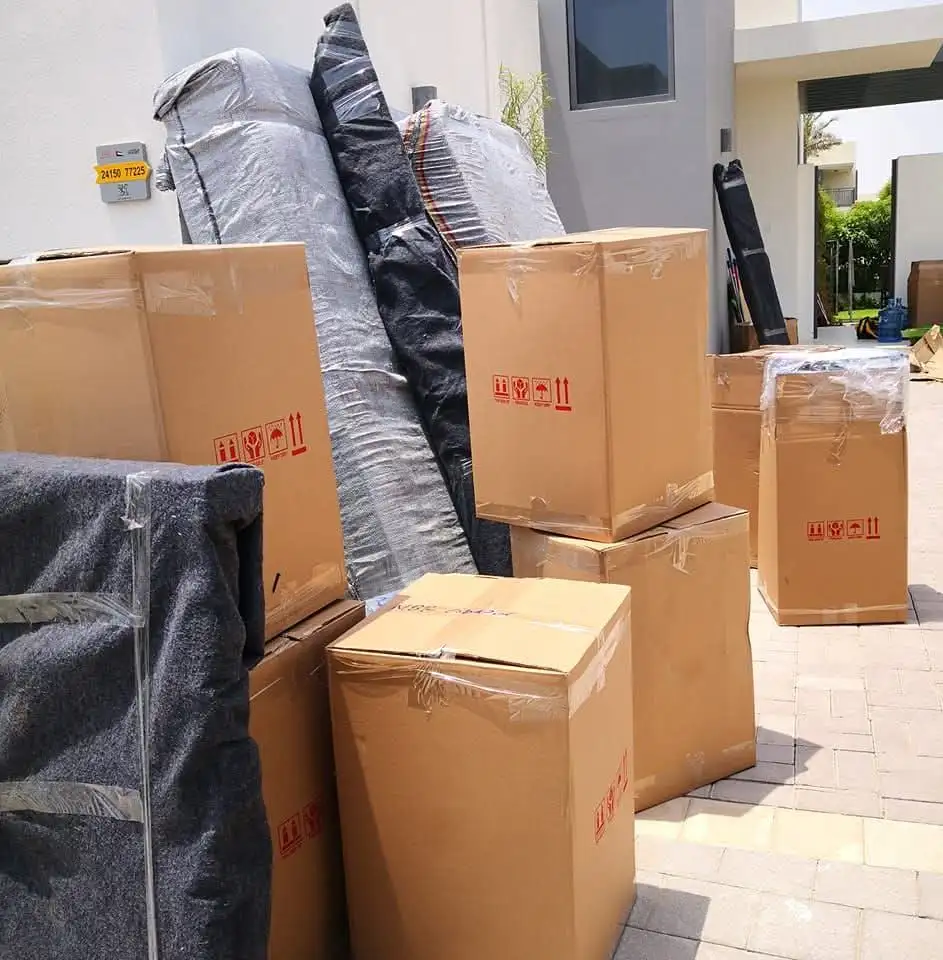
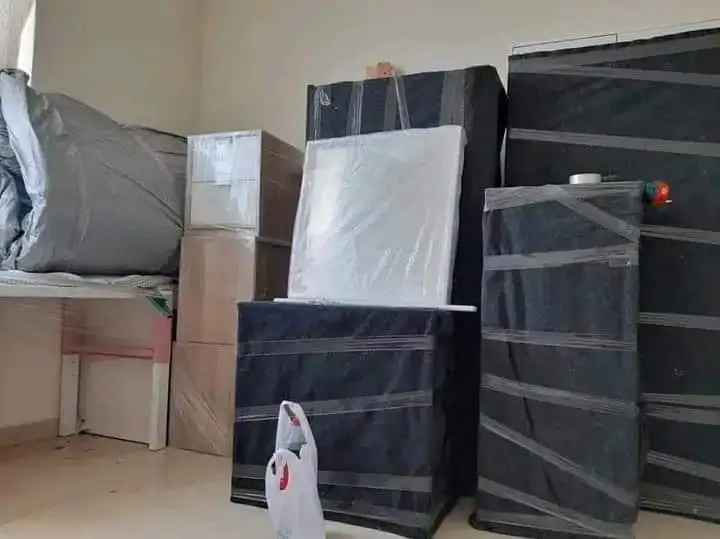
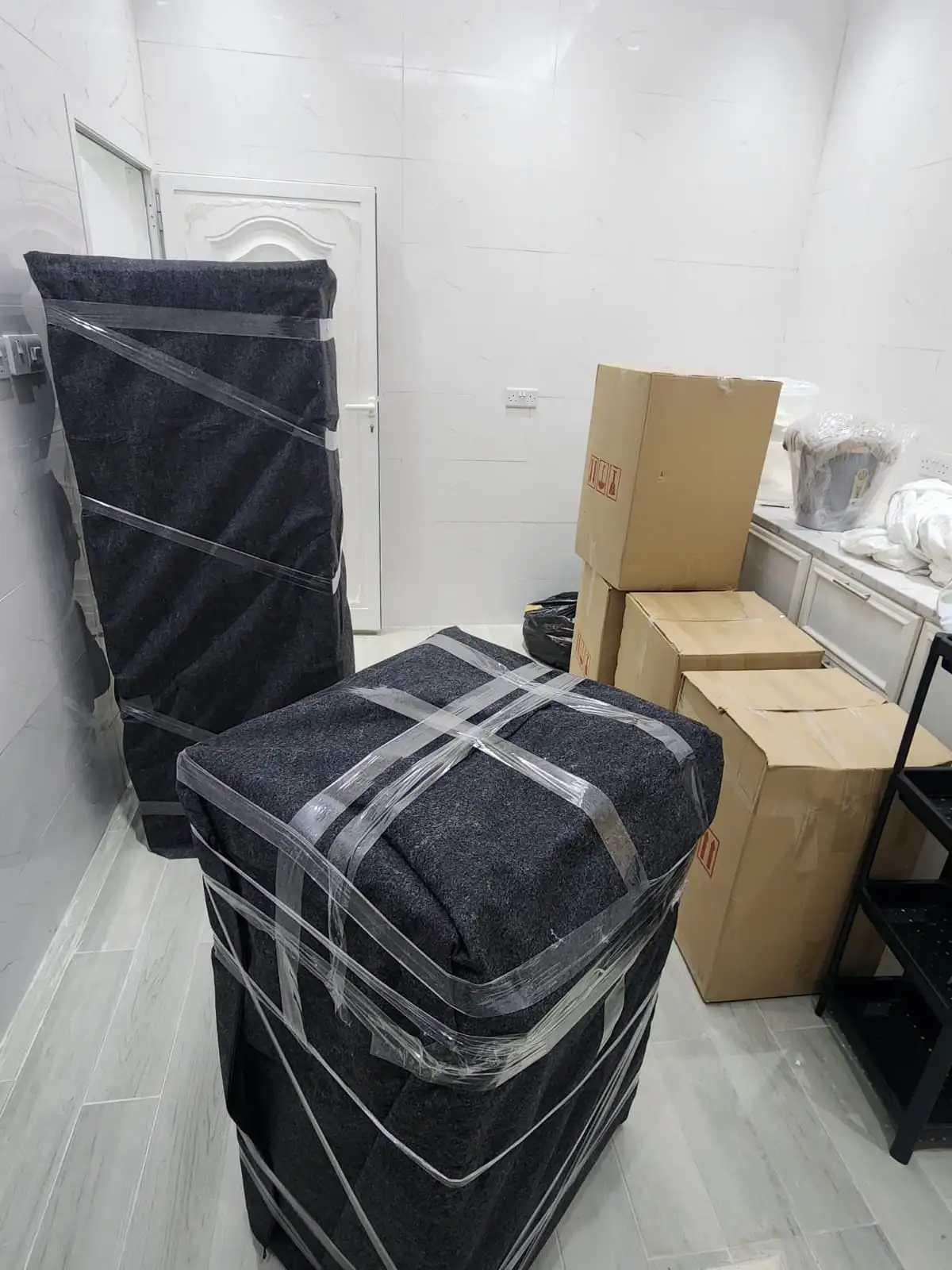
- Moving blankets: Thick padded blankets that wrap around furniture to prevent scratches, dents, and fabric tears during transport. We use 20-40 blankets per move. Cost: AED 15-30 each.
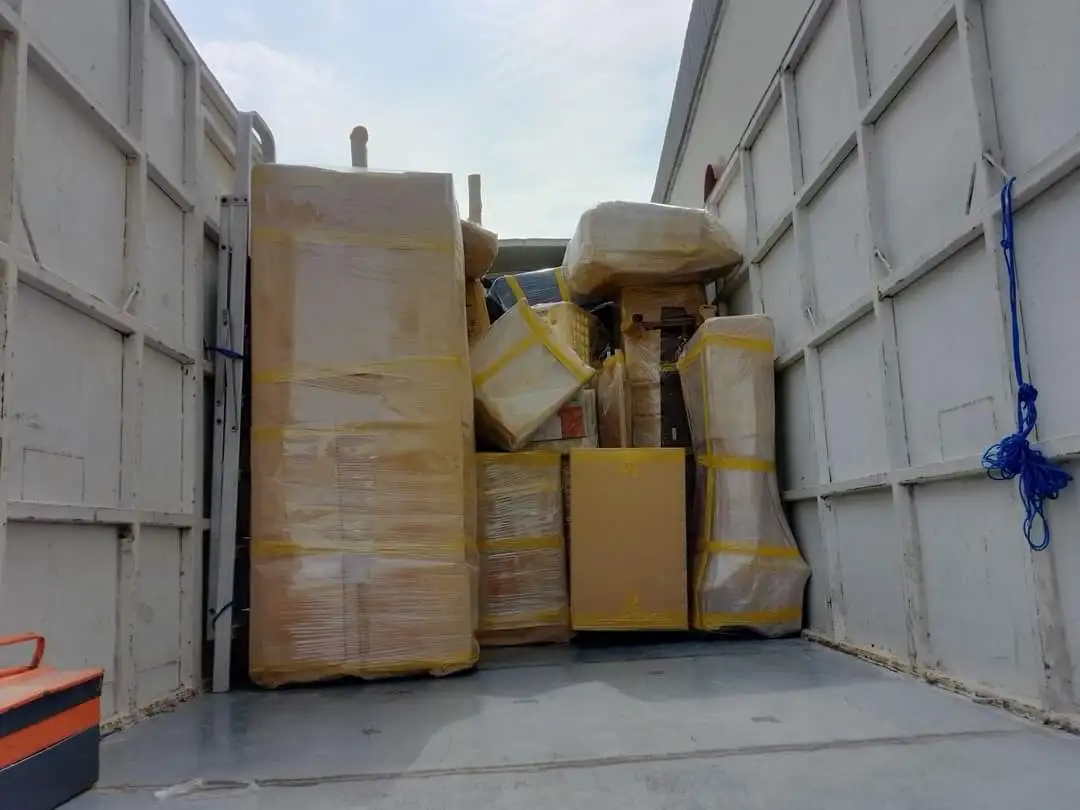
- Stretch wrap: Cling film for furniture. Secures drawers, doors, and loose parts. Protects fabric from dirt and moisture. Cost: AED 10-25 per roll.
- Ratchet straps: Used inside the truck to secure items to the wall rails and prevent shifting during transport.
Techniques for Lifting Heavy Furniture
The Correct Lifting Position
Every year, incorrect lifting causes thousands of back injuries during household moves. Follow these principles:
- Stand close to the item with your feet shoulder-width apart.
- Bend at the knees, not the waist. Keep your back straight and your core engaged.
- Grip firmly at the lowest point you can reach.
- Lift with your legs by straightening your knees. Your back should remain straight throughout.
- Never twist your torso while carrying. If you need to change direction, move your feet.
- Communicate with your partner: Count "1, 2, 3, lift" so you move in unison.
The "High-Low" Carry for Stairs
When carrying heavy furniture up or down stairs, the person at the lower end bears most of the weight. To balance the load:
- The stronger person should take the lower position.
- Tilt the item so it is at a roughly 45-degree angle — nearly parallel to the staircase.
- Move one step at a time. The lower person steps first.
- Use a furniture strap to improve grip and distribute weight across your shoulders.
The "Walk and Tilt" Method for Tall Items
Tall items like wardrobes, bookshelves, and display cabinets should not be carried horizontally. Instead:
- Tilt the item slightly backward (10-15 degrees).
- One person stabilises the top while the other supports the base.
- "Walk" the item by rocking it gently from one bottom corner to the other, moving it forward a few centimetres with each rock.
- Use furniture sliders under the base if on a hard floor.
Protecting Floors and Walls
In Dubai, most apartments and villas have marble, porcelain tile, or hardwood flooring — all of which scratch or crack easily. Protection measures include:
- Lay cardboard or hardboard sheets along the moving path, especially at doorways and corners.
- Use furniture sliders under every leg and corner.
- Wrap door frames with moving blankets or foam padding. Door frames in Dubai apartments are typically 80 cm wide — only centimetres wider than many sofas.
- Remove doors from hinges if an item barely fits through the opening. This gains 3-5 cm of clearance, which is often the difference between a clean pass and a gouged frame.
- Protect elevator interiors: Most Dubai buildings require movers to pad the service elevator walls and floor during a move. We carry dedicated elevator pads for this purpose.
When to Disassemble Before Moving
Disassembly makes heavy furniture lighter, easier to carry, and less likely to be damaged. Items we always recommend disassembling:
- Bed frames: Remove the mattress, headboard, and side rails. Bag all bolts and screws in a labelled zip bag and tape it to the frame.
- Dining tables: Remove the legs if they are bolt-on. Wrap the tabletop in blankets.
- Sectional and L-shaped sofas: Separate into individual sections. Each section should be wrapped individually.
- Wardrobes: Remove shelves, drawers, doors, and hanging rails. Empty all contents into boxes first.
- Desks and office furniture: Remove drawers, keyboard trays, and monitor arms.
Important: Take photos of every item before disassembly. This makes reassembly at the new location much faster and ensures no hardware is lost. Our furniture moving team photographs and labels every component during disassembly.
Items That Are Dangerously Heavy
Some household items are significantly heavier than they look:
- Upright piano: 200-300 kg. Never attempt to move without professional equipment and at least 4 people.
- Marble dining table: 150-250 kg. The stone top must be separated from the base and carried vertically to prevent cracking.
- Large aquarium: Water weighs 1 kg per litre. A 200-litre tank weighs 200 kg when full — always drain completely before moving.
- Safe or vault: 50-300 kg depending on size and fireproofing. Requires a dolly and ramp.
- Treadmill: 80-120 kg. Must be folded, locked, and transported upright.
- Washing machine: 60-85 kg. The drum must be locked with transit bolts to prevent internal damage during transport.
When to Hire Professionals
We believe in being honest: not every move requires professional movers. If you are moving a few light boxes and a desk between apartments on the same floor, you can probably handle it yourself.
However, you should hire professionals when:
- Any single item weighs over 50 kg
- You need to navigate stairs, tight corridors, or narrow elevators
- You have marble, glass, or antique furniture
- The move involves high-rise apartments (floor 10+) in buildings like those in Dubai Marina or Downtown Dubai
- You have a piano, pool table, or large safe
- You or your helpers have any history of back problems
Our villa moving and apartment moving services include all heavy item handling, floor protection, disassembly, reassembly, and furniture placement.
Not sure if your furniture needs professional handling? Send us your inventory for a free assessment and quote — we will tell you exactly what is involved.
What is the safest way to move heavy furniture?
The safest way to move heavy furniture is to use proper equipment — furniture dollies, moving straps, and sliders — rather than relying on manual lifting alone. Always lift with your legs (not your back), keep the item close to your body, and work with a partner. For items over 50 kg, or when navigating stairs and narrow corridors, hire professional movers with the right tools and experience.
How do I protect my floors when moving heavy furniture in Dubai?
To protect tile, marble, or hardwood floors during a furniture move in Dubai, place furniture sliders under all legs and corners, lay cardboard or hardboard sheets along the moving path, wrap door frames in padding, and never drag items across any floor surface. Professional movers also pad elevator interiors as required by most Dubai buildings.
Should I disassemble furniture before moving?
Yes, disassembling large furniture before moving is strongly recommended. Disassembly reduces weight, makes items easier to carry through doorways and elevators, and lowers the risk of damage. Always photograph each item before disassembly, label all screws and bolts in zip bags, and store hardware taped to the main frame piece.