Two Inventories, One Moving Truck, Zero Downtime
A freelance graphic designer in JVC called us to book a standard one-bedroom move. Then she mentioned the three monitors, the colour-calibrated display, the NAS server, the standing desk, and the 47 packages of custom merchandise she sells on Instagram stored in her second bedroom. This wasn't a residential move anymore. It was a hybrid operation — half home, half business — and treating it like a regular apartment move would have been a mistake.
Dubai has over 100,000 active freelancer permits and thousands of home-based e-commerce operations. These businesses live where their owners live. When the owner moves, the business moves too. And the logistics are genuinely different from either a pure residential move or a pure office relocation.
The E-Commerce Inventory Problem
If you're running a home-based e-commerce business — whether that's handmade jewellery, imported skincare, custom clothing, or anything else — your inventory is your livelihood. And during a move, it's vulnerable.
The fulfilment gap: Most home-based sellers can't fulfil orders during a move. If you have 200+ SKUs stored across shelving units in your spare room, packing them means 1–3 days where you can't ship to customers. On platforms like Noon and Amazon.ae, that means pausing your listings or risking negative reviews for delayed shipments.
How to manage it:
- Pre-ship before the move: Run a flash sale 7–10 days before moving day to reduce inventory volume. Fewer boxes = faster move and lower cost.
- Pause listings 48 hours before the move: On Amazon.ae, set your account to "vacation mode." On Instagram and your own website, post a temporary "order pause" notice. Customers understand brief pauses; they don't understand orders that ship late.
- Move inventory last, unpack first: Your business inventory should be the last thing loaded (so it's first off the truck) and the first thing set up in the new location. Every hour of downtime is lost revenue.
Home Office Tech: The Setup That Matters More Than Furniture
Furniture is furniture. But your tech setup is your income. Freelancers and home-based business owners typically have equipment that needs careful handling:
- Multiple monitors: Pack in original boxes if you kept them. If not, use monitor-specific foam padding — not just bubble wrap. A cracked 32-inch 4K display is a AED 2,500 loss.
- Desktop computers and NAS devices: Remove and carry hard drives separately. Vibration during transport is the biggest risk to spinning disks. SSDs are more resilient but still deserve careful handling.
- UPS (Uninterruptible Power Supply): Contains a lead-acid battery. Keep upright during transport. If it's been in use for 2+ years, this might be a good time to replace the battery rather than move a degraded one.
- Standing desks: Electric standing desks from Autonomous, FlexiSpot, or IKEA BEKANT weigh 40–60kg and often can't fit through doorways assembled. Disassemble the top from the frame. Label the cables.
- Networking gear: Router, mesh Wi-Fi nodes, ethernet switches, PoE devices. Take photos of every connection before unplugging. The 45 minutes you spend recreating your network setup from memory is 45 minutes your business is offline.
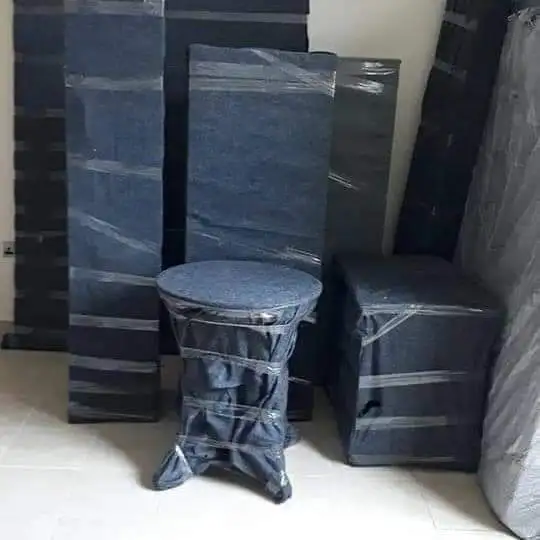
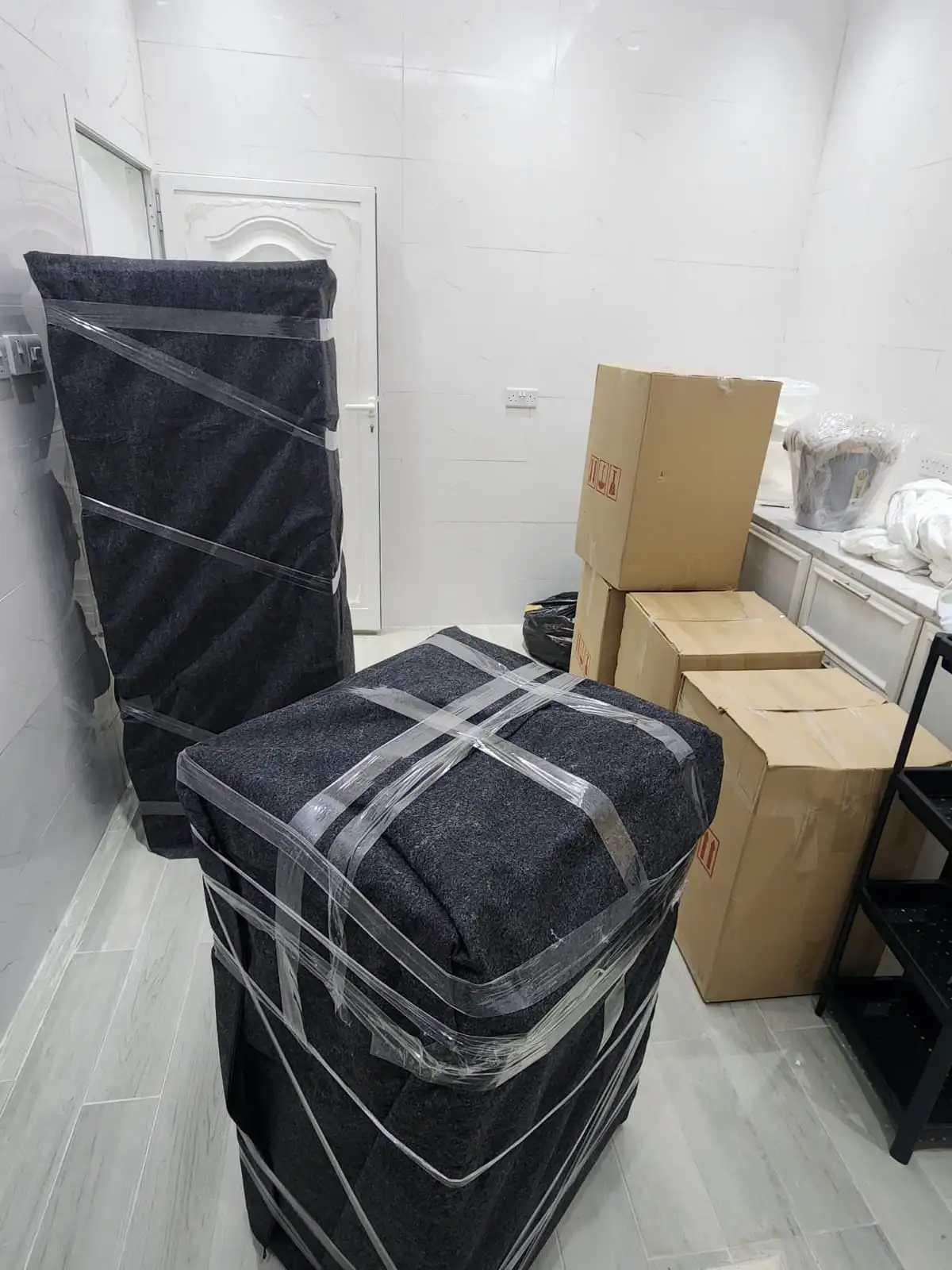
Our team packs IT equipment separately from household items, in dedicated padded crates. It rides in the cabin of the truck, not with the sofa and washing machine.
Internet on Day One: Non-Negotiable
For a regular resident, getting internet set up within a week of moving is fine. For a freelancer or home business, internet on day one is the difference between working and not working.
Plan A: Pre-arrange du or Etisalat installation. Contact your provider 2–3 weeks before the move. Schedule installation at your new address for moving day or the day after. If you're transferring an existing connection, du takes 3–5 working days for the transfer; Etisalat is similar. Both can sometimes do same-day activation for existing customers moving within the same provider's network — but "can" and "will" are different words. Push for the earliest slot.
Plan B: 5G router as backup. Buy a Virgin Mobile or du 5G home router (AED 100–200/month with no contract). Plug it in at your new address and you have internet within 10 minutes. Speed ranges from 100–300 Mbps depending on your area's 5G coverage — more than enough for video calls, file uploads, and e-commerce platform management. Some freelancers keep this permanently as a backup for when their fixed line goes down.
Check our internet setup guide for the full comparison between du and Etisalat packages.
The License Address Update You Cannot Skip
This is where home-based businesses face a problem that pure residential moves don't. Your business license — whether it's from IFZA, DAFZA, SHAMS, Ajman Free Zone, or a mainland DED license — has a registered address. That address is usually your home address.
When you move, you must update your license address within 30 days. Failure to update can technically invalidate your license, which invalidates your visa (if you're self-sponsored on the business), which creates a cascade of legal problems.
How to update, by license type:
- IFZA (International Free Zone Authority): Submit an address change request through the IFZA portal. Costs AED 500–1,000. Processing 5–10 working days.
- SHAMS (Sharjah Media City): Email support with new address proof (Ejari). AED 300–500. Processing 3–7 working days.
- DAFZA (Dubai Airport Free Zone): Submit through DAFZA's online portal with Ejari and new DEWA bill. Processing 5–10 working days.
- Mainland DED license: Update through the Invest in Dubai portal. Requires updated Ejari. AED 350–700. Processing 3–5 working days.
The license update also affects your VAT registration (if applicable). If your business is VAT-registered with the Federal Tax Authority, update your address in the FTA portal within 20 business days of the change.
Building Restrictions on Home Businesses
Before you sign a lease at your new address, check whether the building allows home-based business activity. This is especially important for e-commerce businesses with frequent courier pickups.
Some buildings — particularly in newer communities managed by Emaar, Nakheel, or Meraas — have rules about commercial deliveries to residential units. If you're receiving 20 courier pickups a day from your apartment, building management may object. They see the delivery riders crowding the lobby and the extra traffic on the service elevator.
Ask directly before signing. "Does this building allow home-based business operations with regular courier pickups?" The question might feel awkward, but it's less awkward than a building management complaint three months into your lease.
Ground-floor apartments and villas in communities like JVC, Al Furjan, and Discovery Gardens tend to be more accommodating — separate entrances, easier courier access, less interaction with shared facilities.
Insurance: Your Home Policy Probably Doesn't Cover Business Assets
Standard home contents insurance in Dubai covers personal belongings — furniture, electronics, clothing. It typically excludes business equipment, commercial inventory, and professional tools. If your home office setup is worth AED 15,000 and your inventory is worth AED 30,000, a standard policy might cover the TV but not the things that generate your income.
Options:
- Business contents rider: Some insurers (Zurich, AXA, RSA) offer add-ons to home policies that cover business equipment. Additional premium: AED 500–1,500/year depending on declared value.
- Standalone commercial insurance: If your inventory value exceeds AED 50,000, a separate commercial policy makes more sense. Premiums start at AED 1,200/year.
- Cover for the move itself: Most household contents policies stop at the front door — the moment goods are on a truck, they are outside the policy. If your stock matters, ask your broker to extend cover to goods in transit for the moving window, and give your movers a full itemised list so every carton is documented.
The Zoom-Ready Timeline
If you have client-facing work — video calls, live presentations, coaching sessions — plan your move around your meeting schedule. Nothing kills professional credibility like joining a client call from a half-unpacked apartment with movers audible in the background.
Our recommended timeline for home business moves:
- Thursday: Final packing. Last client call from the old location. Disconnect tech.
- Friday (or Saturday): Physical move. Take advantage of weekend pricing and lighter traffic.
- Saturday/Sunday: Unpack home office first. Set up monitors, test internet (Plan B 5G router if fixed line isn't active). Run a test video call — check lighting, background, audio in the new space.
- Monday: Back to work. Clients see a slightly different background on Zoom but business continues uninterrupted.
Total business downtime: 1–2 days maximum if you execute this well. Schedule no client meetings for Thursday through Sunday of your moving weekend.
Combined Residential + Business Move With SAMA
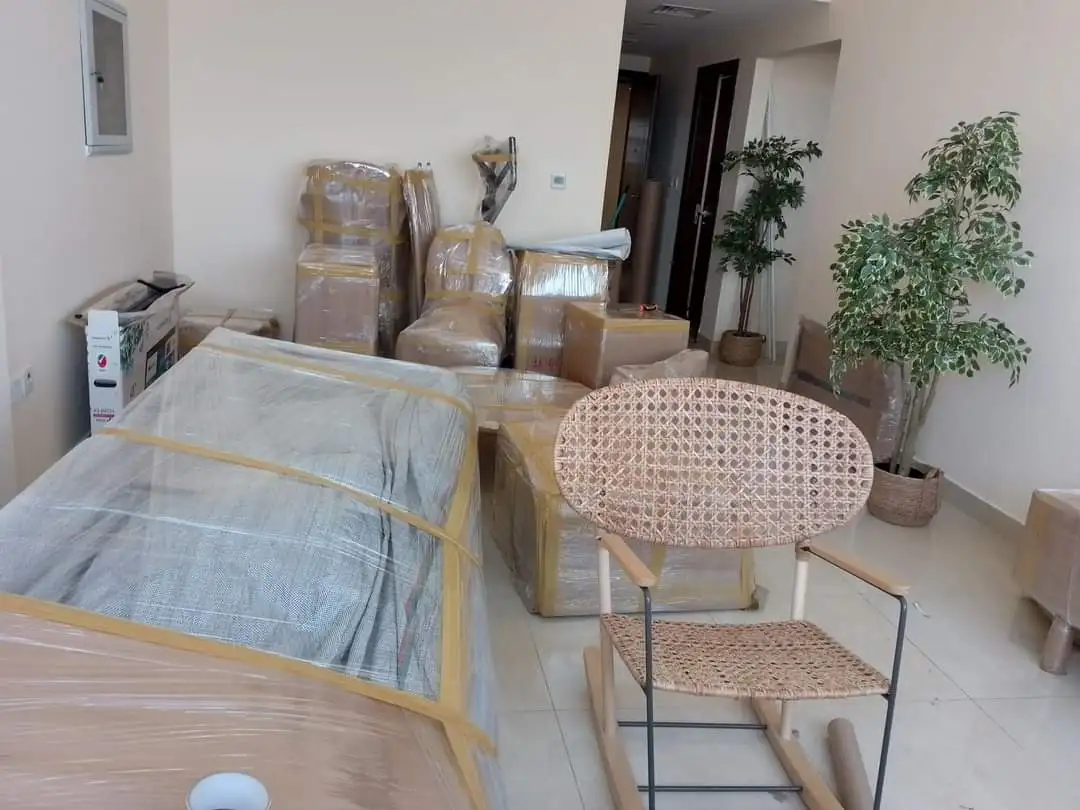
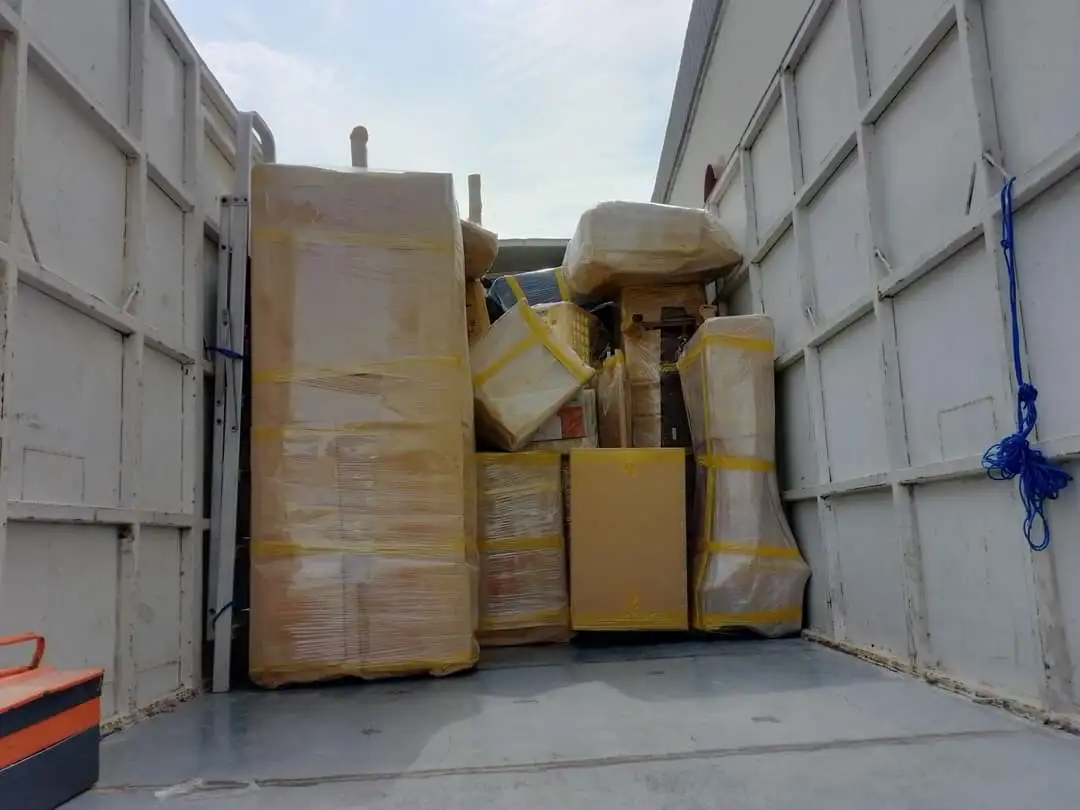
We handle these as a single coordinated move with separate handling protocols. Personal belongings get standard packing and loading. Business inventory gets itemised packing with inventory labels. Tech equipment gets padded crating and cabin transport. One truck, one team, one estimate — but with the extra care your business assets deserve.
For e-commerce businesses with significant inventory (100+ units), we offer inventory management packing that maintains your SKU organisation during transit. Everything arrives at the new location in the same order it left the old one, so you can resume fulfilling orders within hours of unpacking.
Frequently Asked Questions
Do I need to update my freelance license when I move in Dubai?
Yes. Your freelance or business license has a registered address that must match your actual location. Update within 30 days of moving. The process varies by free zone — IFZA charges AED 500–1,000, SHAMS AED 300–500, and mainland DED licenses AED 350–700. Failure to update can technically invalidate your license, which affects your visa if you're self-sponsored.
Does home insurance cover business equipment in Dubai?
Standard home contents insurance typically excludes business equipment and commercial inventory. You need either a business contents rider (AED 500–1,500/year) added to your home policy, or a standalone commercial insurance policy (from AED 1,200/year). For moving day itself, ask your broker whether that policy extends to goods in transit and arrange it directly before the truck loads.
How do I get internet on day one after moving in Dubai?
Schedule your du or Etisalat installation 2–3 weeks before moving, targeting your move-in date. As a backup, buy a 5G home router from Virgin Mobile or du (AED 100–200/month, no contract) for instant connectivity — speeds of 100–300 Mbps are sufficient for video calls and file uploads. Many freelancers keep the 5G router permanently as a business continuity backup.
Can I run an e-commerce business from a Dubai apartment?
Legally yes, with a valid e-commerce or freelancer license. Practically, check with building management before signing a lease — some buildings restrict commercial deliveries and frequent courier pickups to residential units. Ground-floor apartments and villas in communities like JVC, Al Furjan, and Discovery Gardens tend to be more accommodating for home businesses with regular shipping activity.