The Train That Changes Everything About Cross-Emirate Living
Eleven cities. Seven emirates. Two hundred kilometres per hour. The Etihad Rail passenger network is about to rip up the playbook on where you can live and where you can work in the UAE — and if you're planning a move anytime soon, you need to understand what that means for your housing options.
For years, the equation was simple: live in Dubai if you work in Dubai, or endure the E311 crawl from Sharjah. Maybe you saved AED 30K on rent but lost two hours a day in traffic. The maths never quite worked. But a 20-minute train ride from University City station in Sharjah to Jumeirah Golf Estates station in Dubai? That rewrites the whole calculation.
Where the Stations Are (And Why It Matters More Than You Think)
The launch network connects 11 stations across the UAE, but for housing decisions, four stations matter most:
- University City, Sharjah — This puts Muwaileh, Aljada, Al Mamsha, and Nasma Residences within feeder-bus distance of a high-speed rail connection to Dubai. Residents in these communities suddenly gain a viable commute option that doesn't involve sitting on Sheikh Mohammed Bin Zayed Road for 90 minutes.
- Jumeirah Golf Estates, Dubai — The Valley, Mudon, DAMAC Hills, and Tilal Al Ghaf residents benefit here. These communities were always "affordable but far." The train changes "far" to "25 minutes from Sharjah, 35 minutes from Abu Dhabi."
- Abu Dhabi Central — Suddenly relevant for Dubai workers willing to trade a longer (but predictable, air-conditioned, WiFi-equipped) commute for significantly cheaper housing or a lifestyle preference.
- Al Ain — More relevant for Abu Dhabi commuters, but worth noting: Al Ain housing costs roughly 60% less than Abu Dhabi proper.
The Rent Arbitrage Nobody's Talking About
Here's the real story. A 2-bedroom apartment in Muwaileh, Sharjah costs around AED 35,000-45,000 per year. The same spec apartment in JVC or JVT runs AED 65,000-85,000. That's a potential saving of AED 30,000-40,000 annually.
Now factor in the commute cost. An annual rail pass (based on comparable Gulf rail systems and RTA pricing structures) is likely to run AED 4,000-6,000. Add a feeder bus or short drive to the station — another AED 1,500-2,500 annually. Total commute cost: roughly AED 6,000-8,500.
Net savings: AED 21,500-31,500 per year. That's real money. And unlike the E311 commute, you get those two hours back to read, work, or stare out the window at the desert.
But What About Salik?
If you're currently driving Dubai-Sharjah, you're paying AED 12 per day in Salik tolls (two gates, both directions). That's AED 3,120 per year just in tolls — before fuel, tyre wear, and the very real cost of stress. The train eliminates all of that.
Which Communities Gain the Most From Rail Connectivity
Not every community benefits equally. The "connectivity premium" — the bump in desirability and eventually property values — concentrates around stations.
Big winners in Sharjah:
- Al Mamsha — walkable to University City station, already Sharjah's most modern neighbourhood
- Aljada — Arada's master community sits within 3 km of the station
- Muwaileh — the broader area around the station, with rents still among the lowest for quality apartments
Big winners in Dubai:
- Mudon and The Valley — finally connected to something beyond Al Qudra Road
- DAMAC Hills — the golf community gains a public transport lifeline
- Jumeirah Golf Estates — directly adjacent to the station, expect property values to respond
The Practical Reality: What the Hype Doesn't Cover
Look, the train is genuinely transformative. But let's be honest about the gaps.
Last-mile connectivity is the real question. Getting from your front door to the station — and from the destination station to your office — is where the convenience lives or dies. The RTA is planning feeder bus networks, but those aren't finalised yet. If you're 8 km from the nearest station with no bus link, you're still driving to a park-and-ride. Factor that into your time calculation.
Peak hour capacity is unknown. Anyone who's ridden the Dubai Metro at 8:30 AM knows that "rail access" and "comfortable rail access" are different things. The Etihad Rail system uses standard-gauge trains with significantly more capacity than metro carriages, but nobody knows what peak demand will look like until it launches.
Frequency matters. A train every 10 minutes is a game-changer. A train every 45 minutes means you're planning your life around a timetable. Early reports suggest 15-20 minute headways during peak, but this hasn't been confirmed.
Should You Move Now or Wait?
This is the question we get from clients every week. And honestly? It depends on your timeline.
If you're moving in the next 3 months: Don't wait for the train. Choose based on current connectivity. The rail service won't change your commute tomorrow.
If you're signing a new lease that starts later this year: Seriously consider station-adjacent communities. You'll get current rental rates (before the connectivity premium kicks in) and benefit from the improved access once services begin.
If you're buying property: Station-adjacent areas in Sharjah represent possibly the best value play in the UAE right now. When the Dubai Metro opened, properties within 500 metres of stations saw 7-12% value appreciation within two years. Etihad Rail stations could drive similar premiums.
The Cross-Emirate Moving Logistics
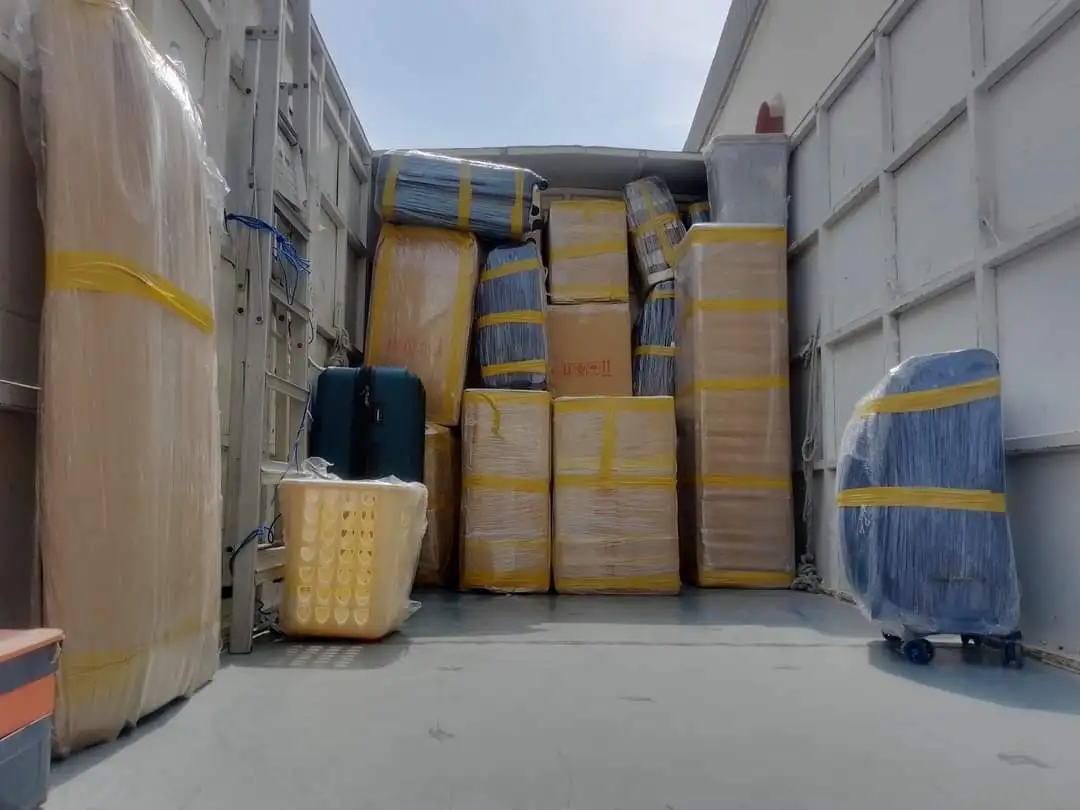
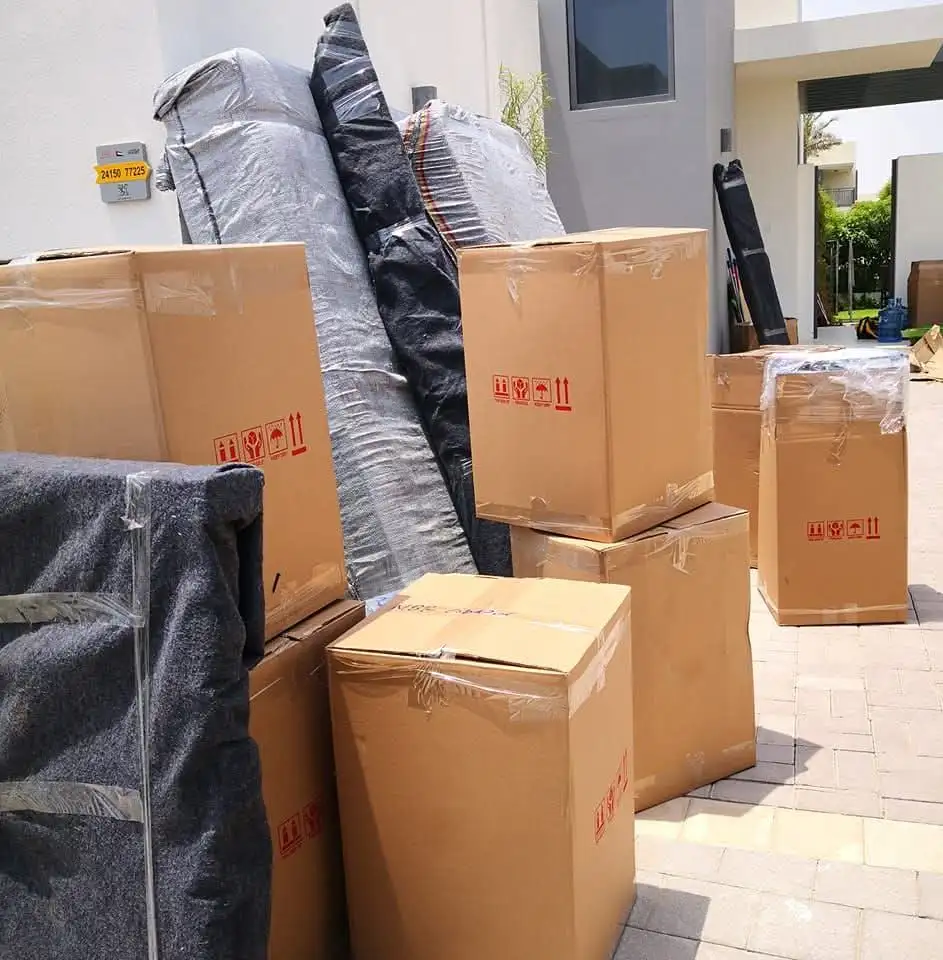
Whether you're moving towards a station or away from one, apartment moves between emirates have specific logistics. Sharjah to Dubai moves require navigation of peak-hour truck restrictions — heavy vehicles can't cross into Dubai via most border crossings between 6:30 AM and 9:00 AM.
We handle roughly 40 cross-emirate moves per month. The key is timing: start loading in Sharjah by 7 AM, cross into Dubai after 9:30 AM, and you avoid both the truck ban and the worst of the commuter traffic. A typical 2-bed Sharjah-to-Dubai move runs AED 2,200-3,500 depending on floor level and furniture volume.
For villa relocations between emirates — say, from a Sharjah compound to DAMAC Hills — expect AED 4,500-7,000 and a full-day operation. The distance isn't the issue; it's the sheer volume of a villa's contents.
The Bottom Line
Etihad Rail doesn't just add a transport option. It redefines what "convenient location" means in the UAE. Communities that were "too far" become "20 minutes by train." Areas that justified premium rents purely on proximity might lose that edge.
If you're thinking about your next move — literally — get a free estimate and talk to our team about which areas make sense for your commute, budget, and lifestyle. We've been moving families across all seven emirates since 2017, and the rail question is now part of every relocation conversation we have.
Frequently Asked Questions
How much will Etihad Rail tickets cost for daily commuters?
Official pricing hasn't been announced yet, but based on RTA pricing structures and comparable Gulf rail systems, expect annual passes in the range of AED 4,000-6,000 for inter-city commuters. Single journey tickets between Sharjah and Dubai are likely to cost AED 15-25. Even at the high end, this undercuts the combined Salik, fuel, and parking costs of driving — which run AED 800+ per month for a typical Sharjah-Dubai commuter.
Which Sharjah areas are closest to an Etihad Rail station?
The University City station in Sharjah puts Muwaileh, Aljada, Al Mamsha, and Nasma Residences within a 3-5 km radius. Al Mamsha is likely the closest residential community — potentially walkable to the station. These areas currently offer 2-bedroom apartments from AED 35,000-50,000 annually, roughly 40-50% less than equivalent Dubai communities.
Should I wait for Etihad Rail to launch before choosing where to live?
If you're signing a 12-month lease, it depends on timing. Moving now into a station-adjacent community means locking in current rental rates before the connectivity premium drives prices up. But don't choose a location solely based on rail access — the last-mile connectivity (feeder buses, parking at stations) isn't confirmed yet, and a station 8 km from your apartment isn't much help without reliable connections.
How much does a cross-emirate move cost between Sharjah and Dubai?
A standard 2-bedroom apartment move from Sharjah to Dubai costs AED 2,200-3,500 with professional movers including packing materials, disassembly, transport, and reassembly. Villa moves between emirates run AED 4,500-7,000. The main variables are floor level, furniture volume, and whether you need full packing services. Cross-emirate moves require careful timing around RTA truck restrictions at border crossings.